Challenger Chatter | November 6, 2026
How Trying New Things Helps Kids Build Confidence, Teamwork and Grit

How Trying New Things Helps Kids Build Confidence, Teamwork and Grit
By the ActivityHero Team
This post contains affiliate links. If you register for a camp or class through these links, Challenger Sports may earn a small commission at no extra cost to you.
The art class, the soccer camp, the first day where they don't know a single kid. These moments feel small, but they teach skills your child will use for life. Here's what the research says and how you can help.
"I'm not good at that."
If you have a school-age kid, you've probably heard this one, sometimes before they've even tried. You've probably also seen the flip side, the proud grin after they finish something they were nervous about.
That shift from "I can't" to "I did it" is where a lot of growing up happens. And trying something new is one of the easiest ways to get there.
Quick takeaways
- Kids who believe they can improve handle mistakes better, and parents can help build that belief.
- Day camps and weekly classes count. Big benefits don't require a sleepaway camp.
- The way you praise and the questions you ask at pickup make a real difference.
>> Ready to help your child try something new? Find camps and classes near you on ActivityHero.
The skills report cards don't measure
Academic subjects like reading and math get most of the attention during the school year. But ask any teacher or camp counselor what helps a kid thrive, and you'll hear about other things too. Can they work with a group? Bounce back from a mistake?
The Collaborative for Academic, Social, and Emotional Learning, known as CASEL, calls these social and emotional skills. When CASEL asks people to picture what a young person needs to reach their goals, the answers usually sound the same: "staying motivated, communicating effectively, practicing curiosity, and working with others to solve problems."1
Kids pick up these skills by doing things, and camps, classes and after-school programs give them plenty of chances to practice.
Trying new things builds a growth mindset
Stanford psychologist Carol Dweck has spent decades studying why some kids lean into challenges while others avoid them. Her answer is mindset.
Kids with a fixed mindset think their talents are set from the start. Kids with a growth mindset believe their abilities can grow "through hard work, good strategies and help from others."2
"When they are in a growth mindset, difficulty is a natural part of learning, so they are more likely to take it in stride and find new strategies that work better."
Carol Dweck, Stanford University2
A new activity is a great place to practice this. Your child probably won't be great at pottery or coding on day one. Nobody is. When they stick with it and see themselves get better, they learn that effort pays off.
Dweck also found that the kind of praise kids hear matters. Kids praised for being smart or talented tended to shy away from challenges. Kids praised for their hard work, strategies, focus and persistence stayed motivated. "They're more likely to take on challenges and thrive in the face of difficulty," she told Stanford News.2
Confidence comes from doing
We all want our kids to feel confident. But you can't hand confidence to a child. They build it by doing slightly hard things and coming out okay.
Harvard's Center on the Developing Child has studied resilience for years. One trait shows up again and again in kids who handle tough times well, and that's "a sense of mastery over life circumstances."3 Put simply, these kids have learned that what they do makes a difference.
The Center also says that learning to cope with manageable stress, the everyday kind, is critical for building resilience. And their message for parents is encouraging: "The capabilities that underlie resilience can be strengthened at any age."4
A new class or camp is a low-stakes place to get that practice. Every bout of first-day jitters and every project that finally clicks adds up.
Teamwork and friendship take practice
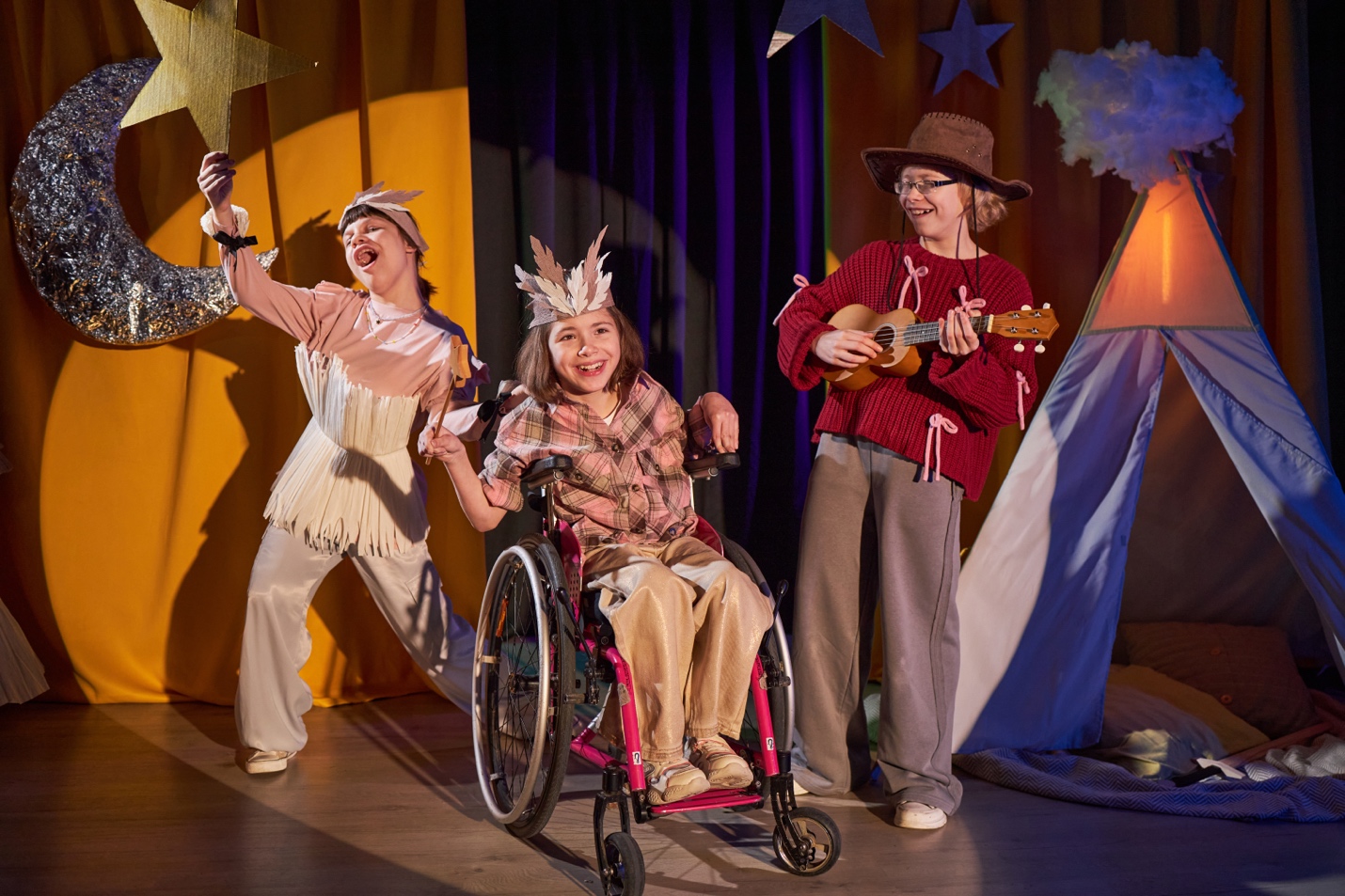
Camps and classes help kids meet peers from other schools and neighborhoods, and work together on a shared goal like building a robot or putting on a show.
The American Camp Association studied more than 5,000 families from 80 accredited camps. Parents, staff and kids reported significant growth in friendship skills, peer relationships, social comfort, independence and leadership.5 The researchers concluded that "camp is a unique educational institution and a positive force in youth development."5
Good news for parents of younger kids: the study found no differences between day camp and overnight camp.5 Your child doesn't need to sleep away from home to get the benefits.
Independence grows in small moments
Independence at this age looks like packing their own bag, asking an instructor for help or working out a disagreement without a parent stepping in.
The ACA's newer National Camp Impact Study, run with researchers at the University of Utah, found that most parents want their kids to have fun, build social skills and develop independence at camp.6 The strongest programs had a few things in common, including "high levels of engaging and interest-driven activities, feelings of belonging, supportive youth-staff relationships, and opportunities for experiential learning."6
Why another caring adult matters
That point about supportive staff is worth a pause. Harvard researchers found that every child who does well despite hardship has had at least one stable, committed relationship with a supportive adult.3
"Resilience depends on supportive, responsive relationships and mastering a set of capabilities that can help us respond and adapt to adversity in healthy ways."
Jack Shonkoff, Center on the Developing Child at Harvard University3
Parents are the main event, of course. But a great art teacher, soccer coach or coding instructor can become one more adult in your child's corner.
6 ways to help your child get the most out of a new activity
You don't need a perfect plan. A few simple habits go a long way.
- Let them pick. As kids get older, parents rely more on their child's interests when choosing camps, ACA researchers found.6 Offer two or three options and let them make the call.
- Praise the process. Swap "You're so talented!" for "You kept going even when it got tricky" or "I like how you found a new way to do that." This is the kind of praise Dweck's research supports.2
- Talk about first-day nerves ahead of time. Let them know it's normal to feel awkward when you don't know anyone yet.
- Ask better questions at pickup. "How was it?" usually gets you "fine." Try "What was the hardest part of today?" or "Who did you work with?"
- Agree on a fair trial. Decide together up front that they'll finish the session before deciding whether to quit.
- Mix it up. A kid who loves building might also love theater. Trying different kinds of activities helps kids find interests they didn't know they had.
Activity ideas to get you started
Not sure where to begin? Start with what your child is already curious about. Builders might love LEGO and engineering camps, and creative kids might light up in art classes. Active kids may enjoy soccer, tennis, or swimming. Every new class, camp or club is a chance for your child to learn that they can do hard things. Those skills stick around long after the activity ends.
On ActivityHero, you can search camps and classes near you, filter by age, dates and location, read reviews from other parents and register in one place.
Powered by ActivityHero
Sources
- CASEL. "Fundamentals of SEL." Collaborative for Academic, Social, and Emotional Learning.
- Parker, Clifton B. "Perseverance key to children's intellectual growth, Stanford scholar says." Stanford Report, April 29, 2015.
- Walsh, Bari. "The Science of Resilience." Harvard Graduate School of Education, Usable Knowledge, March 23, 2015. Summarizes the National Scientific Council on the Developing Child working paper "Supportive Relationships and Active Skill-Building Strengthen the Foundations of Resilience."
- Center on the Developing Child at Harvard University. "A Guide to Resilience."
- American Camp Association. "Directions: Youth Development Outcomes of the Camp Experience." National study of more than 5,000 families, 2001 to 2004.
- American Camp Association. "National Camp Impact Study." Conducted with the University of Utah, 2017 to 2022.